

1
Inspect Each Hive with Context
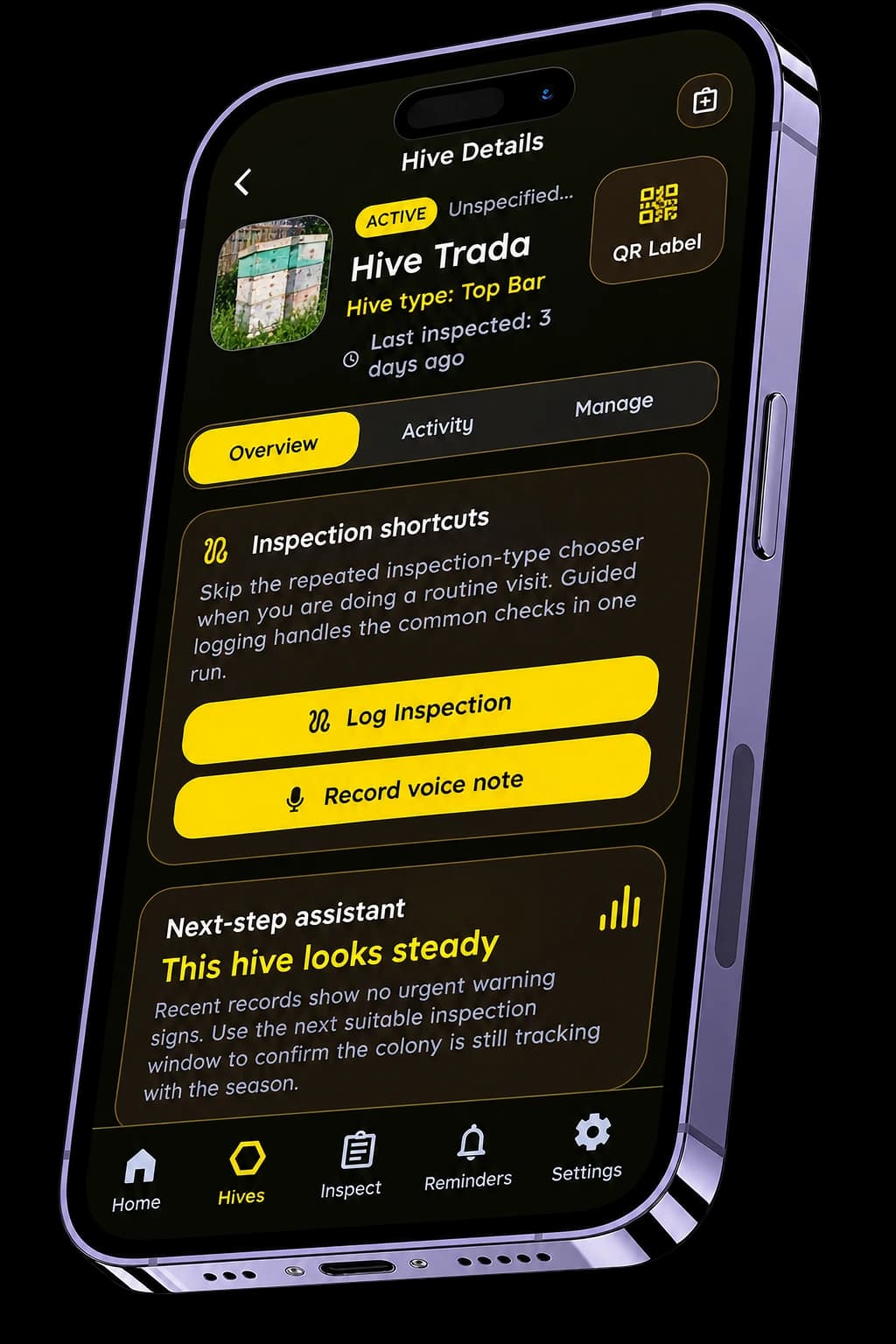
Open a hive to review its status, last inspection, and recent history, then start a guided inspection or capture a voice note without losing your place in the yard.
TerraAurelium is an offline-first beekeeping app and connected web dashboard for recording hive inspections, tracking colony health, managing apiary records, and planning follow-up work in low-signal yards.
Product facts
From opening the right hive record to reviewing the season's harvest, every workflow keeps practical field work connected to a clear history.
Open a hive to review its status, last inspection, and recent history, then start a guided inspection or capture a voice note without losing your place in the yard.
Plans for beekeepers
Choose the record-keeping tools that fit the way you keep bees today, from a few backyard hives to a growing apiary.
A straightforward place to start keeping inspection records before committing to a paid plan.
Beginners, backyard beekeepers, and anyone trialing digital hive records.
Unlimited hives, inspection intelligence, dashboard analytics, and reporting with flexible quarterly billing.
Dedicated hobbyists, growing apiaries, and commercial teams managing many hives.
All Pro features with yearly billing and a 1-week free trial.
Dedicated hobbyists, growing apiaries, and commercial teams ready to commit for the year.
Question 1 of 6
TerraAurelium is an offline-first beekeeping app for logging inspections, tracking colony health, setting reminders, keeping records together, and exporting reports when you need them.
Built to help beekeepers keep better records in the field, then find what matters when they need it later.
Keep apiaries and hives organized with a clearer view of what is active, what changed, and what needs attention next.
Explore this workflowCapture inspection details in the yard without waiting for signal or rewriting notes later.
Explore this workflowTrack brood pattern, queen status, and colony notes so each inspection adds useful context to the next one.
Explore this workflowKeep a reliable history of inspections, reminders, and harvest records that is easier to review over time.
Explore this workflowCreate apiaries and hives with the names, notes, and structure you already use in the field.
Capture brood pattern, queen status, feeding, treatments, and follow-up notes while you are at the hive.
Look back at inspection history and colony notes before the next visit so decisions stay grounded in the record.
Pull together structured records when you need to review work, share updates, or prepare documentation.
These pages break the product down by task so beekeepers can quickly find the part of TerraAurelium that matches their work.
Why TerraAurelium is built for inspections in remote yards where signal cannot be trusted.
Read more →Structured TerraAurelium inspection logging for brood pattern, queen status, treatments, and follow-up work.
Read more →Why TerraAurelium gives beekeepers a clearer system for hive history, exports, and searchable field records.
Read more →Track brood quality, colony condition, and trend changes over time.
Read more →Recurring tasks and inspection follow-ups without loose paper notes.
Read more →Tie harvest output back to hives, apiaries, and season-long performance.
Read more →Track mite checks, treatment thresholds, and follow-up history.
Read more →Keep queen evidence, introductions, and acceptance checks organized.
Read more →Turn structured inspection evidence into current follow-up priorities.
Read more →TerraAurelium now includes educational resources on inspections, digital record keeping, remote apiary workflows, compliance prep, and commercial operations.
A practical record structure for comparing Varroa checks before and after treatment without losing the hive-level context.
Read resource →The record-keeping mistakes that make hive inspection history harder to trust and harder to use later.
Read resource →The practical record-keeping capabilities that matter most once apiary operations scale.
Read resource →A focused queen record for keeping introductions, acceptance evidence, and later performance attached to the correct colony.
Read resource →Get early access to better inspection records, reminders, and apiary reporting. Now available on Google Play.

